In this blog you will learn:
- Why packaging waste quietly drives disposal costs in retail environments
- How limited stockroom space forces many retailers to increase collection frequency
- Operational changes that allow retailers to store more waste between collections without disrupting store operations
Retail waste rarely arrives in large loads. It builds up throughout the day as deliveries are unpacked and packaging is removed.
For independent retailers, this quickly fills stockrooms that were never designed for waste handling. As space disappears, many increase collection frequency, however, in many cases, the issue is not the amount of waste generated, but how much space that waste occupies before collection.
The Hidden Cost Driver: Waste Volume vs Waste Density
Retail waste costs are heavily influenced by volume rather than weight.
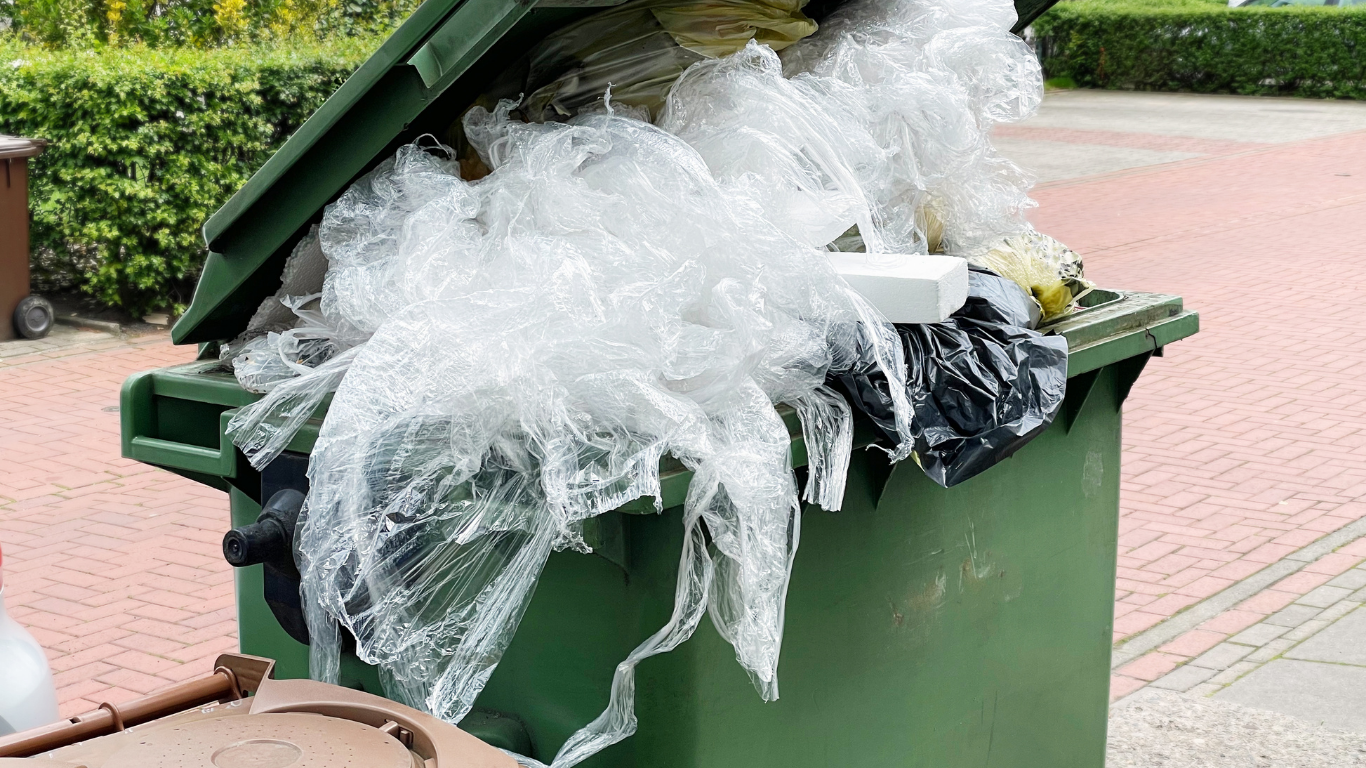
Cardboard boxes are designed to protect goods during transport, which means they contain large amounts of air space. When these boxes are stored loosely after unpacking, they quickly fill bins or cages even though the actual material volume is relatively small.
This creates a misleading situation where waste containers appear full long before the material weight justifies collection.
Consider the difference:
| Waste Handling Method | Storage Impact |
| Loose cartons placed into bins | Containers fill rapidly with air space |
| Staff flatten boxes manually | Partial volume reduction but inconsistent |
| Compacted cardboard bales | Significantly higher material density |
| Structured waste containment | Controlled storage until collection |
Increasing waste density allows retailers to store significantly more material in the same footprint, which directly reduces pressure to increase collection frequency.
Why Limited Stockroom Space Creates Waste Pressure
Independent retailers often operate with extremely constrained back-of-house areas. Stockrooms must accommodate inventory, returns processing, promotional materials and operational supplies.
When packaging waste begins occupying this space, several operational problems occur:
- Staff struggle to move inventory efficiently
- Fire escape routes and walkways become obstructed
- Waste begins accumulating in customer-facing areas
- Deliveries become harder to unpack quickly
As a result, waste is often removed earlier than necessary simply to free up space.
This is why space management is one of the most important factors in retail waste cost control.
Retailers who manage waste efficiently focus on how packaging moves through the stockroom, rather than just how it leaves the building.
How Retailers Reduce Waste Costs Without Increasing Collections
Operators that successfully control waste costs typically improve how waste is handled immediately after unpacking deliveries.
1. Eliminating Loose Waste Storage
Loose cardboard stacks are one of the biggest drivers of wasted stockroom space.
When cartons are compacted immediately after unpacking, retailers prevent waste from accumulating throughout the day and maintain a more organised stockroom environment.
2. Creating a Dedicated Waste Handling Point
In many stores, packaging waste ends up scattered across receiving areas, shop floors and storage rooms.
Retailers that centralise waste handling improve:
- Visibility of waste volumes
- Staff efficiency when processing deliveries
- Consistency in waste handling procedures
A single waste handling area also allows retailers to control how packaging is prepared for removal.
3. Reducing Staff Time Spent Handling Packaging
Breaking down boxes manually may appear simple, but across hundreds of deliveries it becomes a significant labour task.
Retailers that streamline packaging handling reduce:
- Staff time spent flattening cartons
- Repeated trips to external waste areas
- Handling risks from loose packaging piles
Faster waste handling also helps staff maintain stockroom organisation during peak delivery periods.
Traditional Waste Handling vs Optimised Retail Waste Systems
| Traditional Retail Waste Handling | Optimised Waste Handling |
| Loose cartons stored in cages or bins | Packaging compacted immediately |
| Waste spread across stockroom areas | Centralised waste handling point |
| Staff repeatedly break down boxes | Reduced manual handling |
| Waste removed when space runs out | Waste stored efficiently until collection |
Retailers that optimise waste handling do not necessarily generate less waste. Instead, they store it more efficiently, allowing existing collection schedules to remain sufficient.
Practical Ways Retailers Improve Waste Efficiency
Operators that manage retail waste effectively often focus on small operational changes that produce measurable improvements.
Examples include:
- Processing packaging waste immediately after deliveries are unpacked
- Keeping cardboard separate from general waste streams
- Preventing temporary waste piles from forming during busy periods
- Ensuring stockroom waste areas remain organised and accessible
- Increasing the density of recyclable materials before storage
These improvements help retailers maintain stockroom efficiency while controlling disposal costs.
Conclusion
For independent retailers, waste management is often a space challenge. Loose packaging quickly fills stockrooms and pushes operators to increase collection frequency.
Rokiwaste helps retailers improve waste density and storage efficiency using engineered balers and compactors designed for space-constrained retail environments.
This allows significantly more packaging waste to be stored between collections while keeping stockrooms organised.